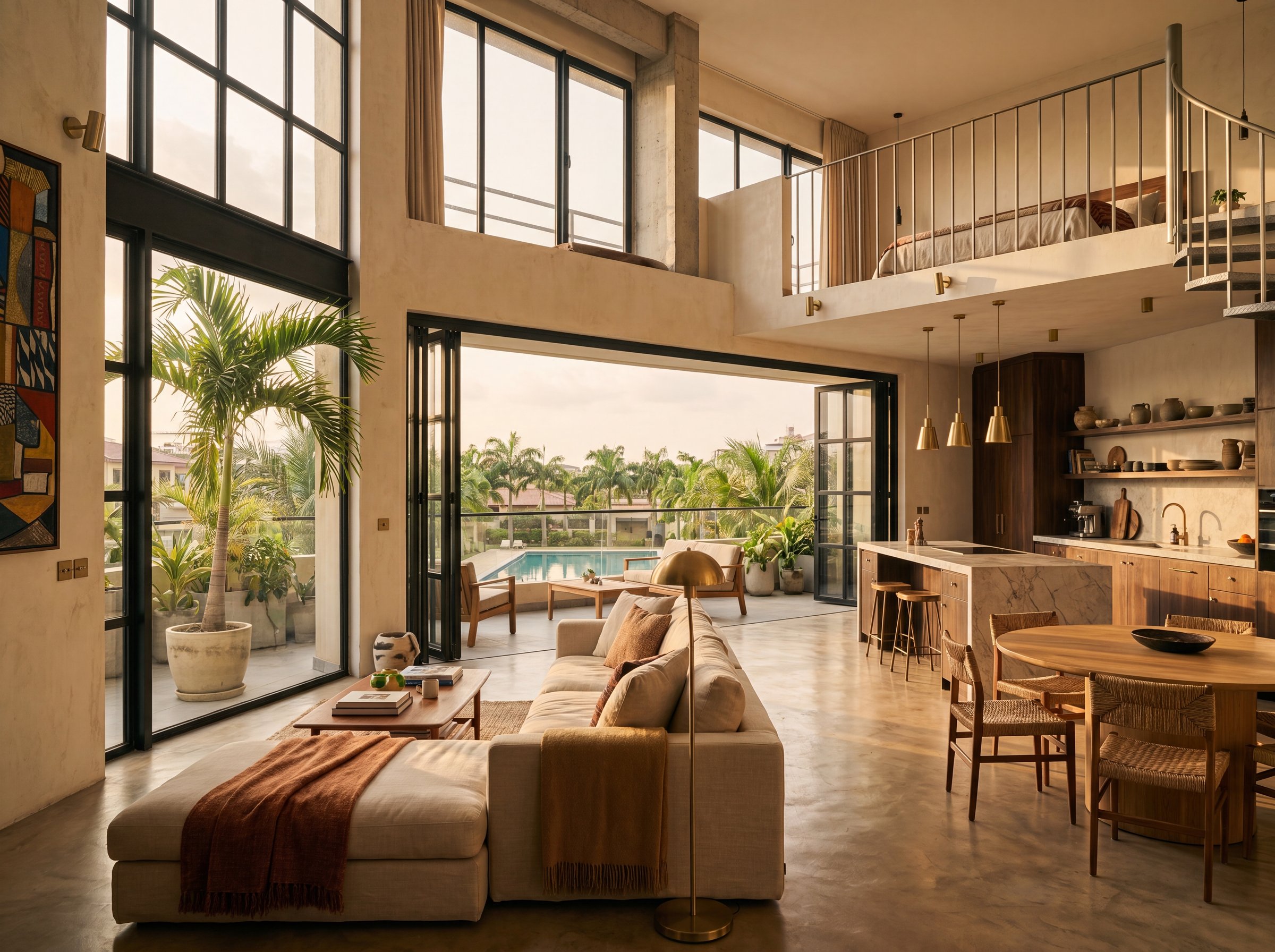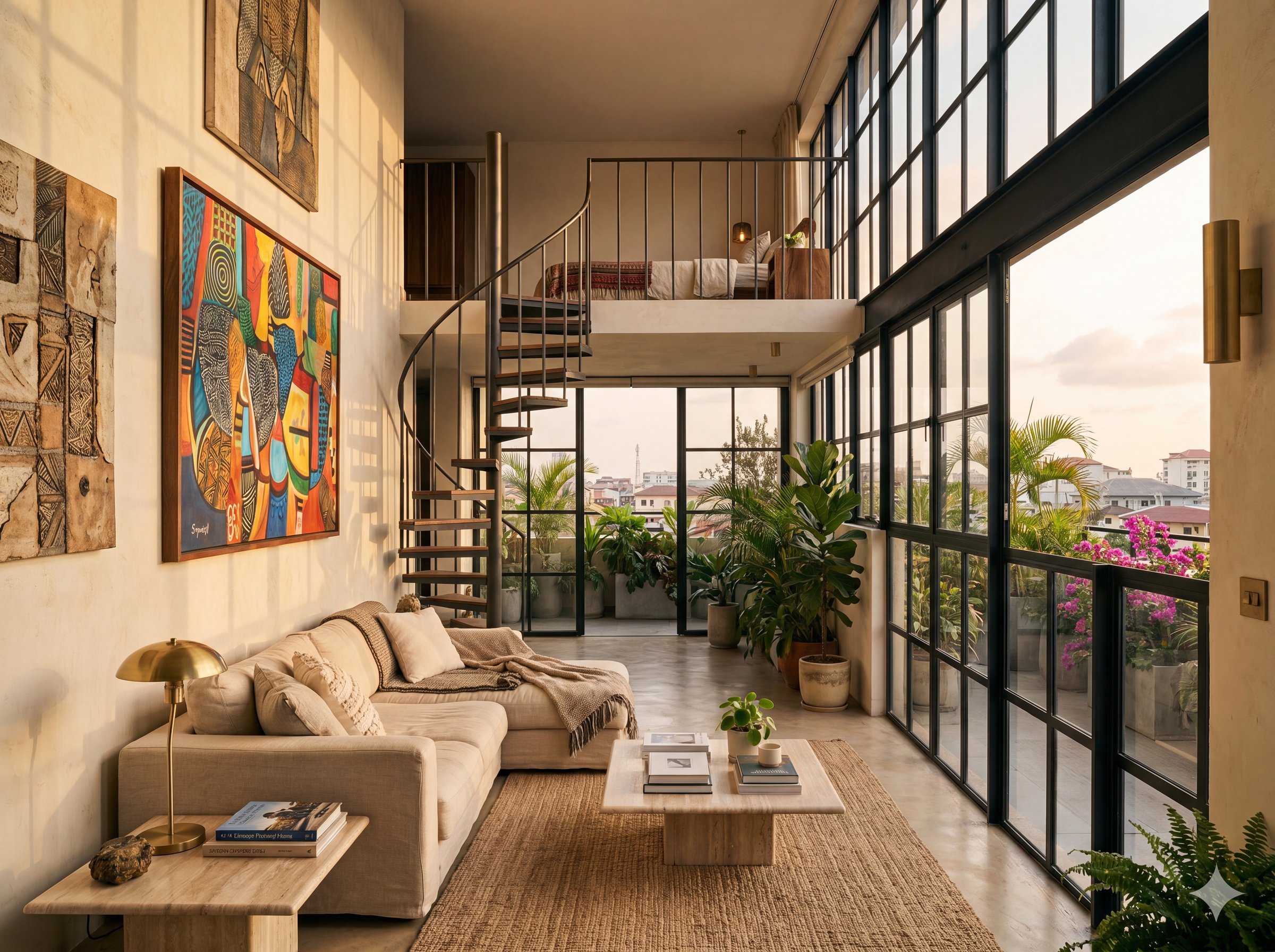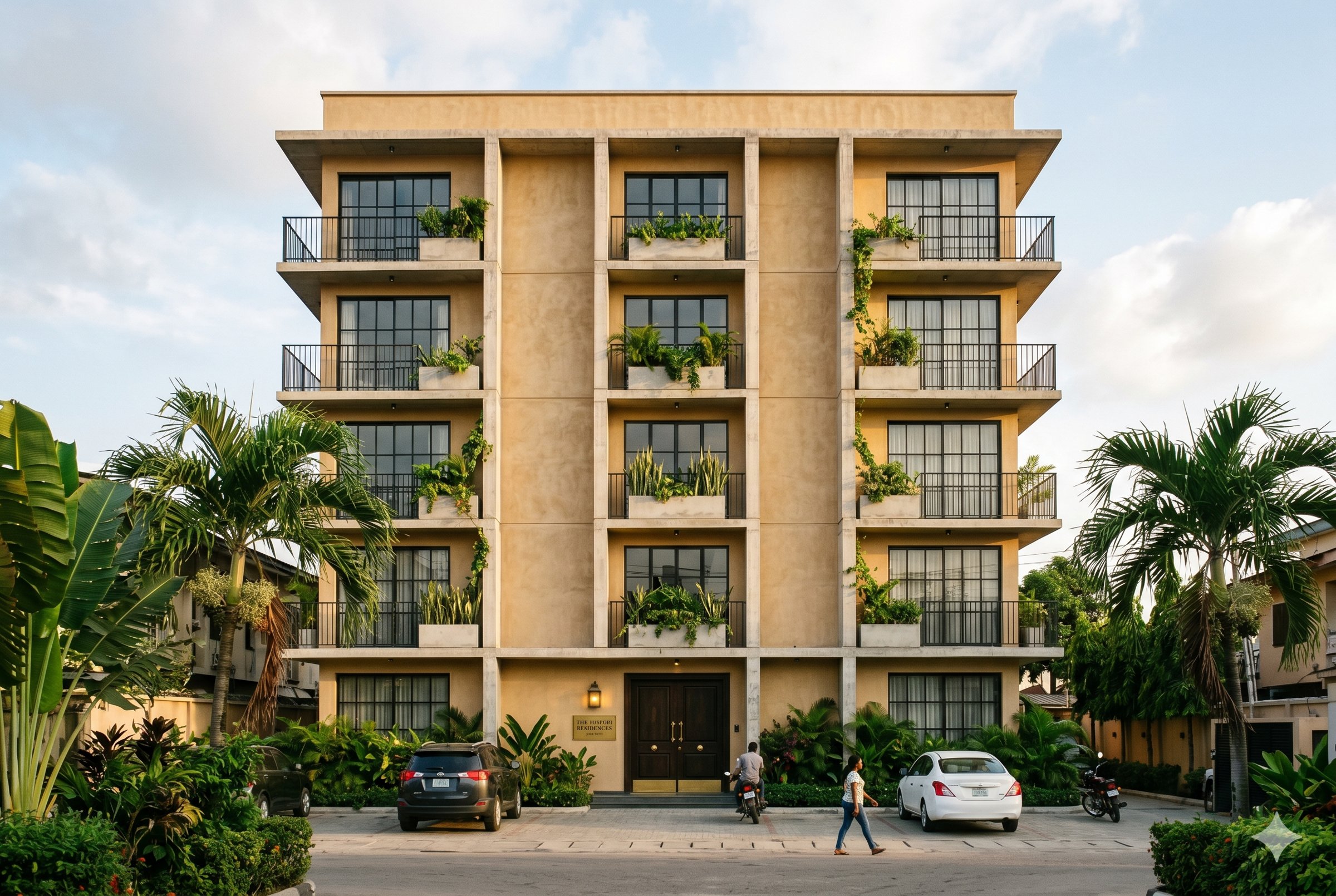
Co-owned. Loft living. Ibeju-Lekki.
A master-planned co-ownership estate for the diaspora investor, the young professional, and the small group of trusted partners. Built on the legal architecture that fixes everything Lagos property has been getting wrong.
Buy alone, at a price no middle-class income can carry. Or pool money informally with friends and family, and lose it to a forged title, a missing deed, or a co-owner who runs away with the documents.
A three-bedroom Lekki loft costs ₦80M to ₦130M. A senior banker on ₦1M a month cannot cash it. Mortgages are unavailable at 27% MPR. The buyer is locked out of the asset class entirely.
Three friends raise the money together. The deed lists one name. One party sells, dies, or is sued. The other two have a photocopy and a story. Real estate fraud cost Nigeria USD 4 billion last year alone.
Cornerstone refuses the trade. A small group of named co-owners. A registered Co-Ownership Deed. A Professional Trustee holding the title. A building designed for this exact ownership model, on land you can drive to today.
Diaspora capital is at record levels, the middle class has been priced out of solo ownership, and the trust deficit has reached the point where buyers will pay a clear premium for institutional protection. Each force on its own would be enough. Together, they define a category waiting to be claimed.
African diaspora remittances exceeded USD 100 billion in 2025. Nigeria alone received USD 23 billion, roughly 25 times its formal FDI. A meaningful share is earmarked for property and currently sits in low-yield savings because the structures to deploy it safely do not exist.
Lagos property prices rose 18% in naira terms between January 2025 and January 2026. A three-bedroom that cost ₦11M in 2020 now commands ₦27.5M. A single young professional on ₦1M a month cannot service a ₦40M plot. Two or three of them, pooled correctly, can.
Real estate fraud cost the Nigerian economy USD 4 billion in 2025. Only 3% of Nigerians hold a valid land title. One in five Lagos buyers experiences a scam attempt every year. Buyers will pay a clear premium for verified, legally bonded transactions. Cornerstone is built on that premium.
Plots within 30 minutes of the Coastal Highway have appreciated 66% to 133% over the last 24 months. The Dangote Refinery is operational. The Lagos-Calabar Coastal Highway Section One is open. Cornerstone sits inside both catalyst zones.
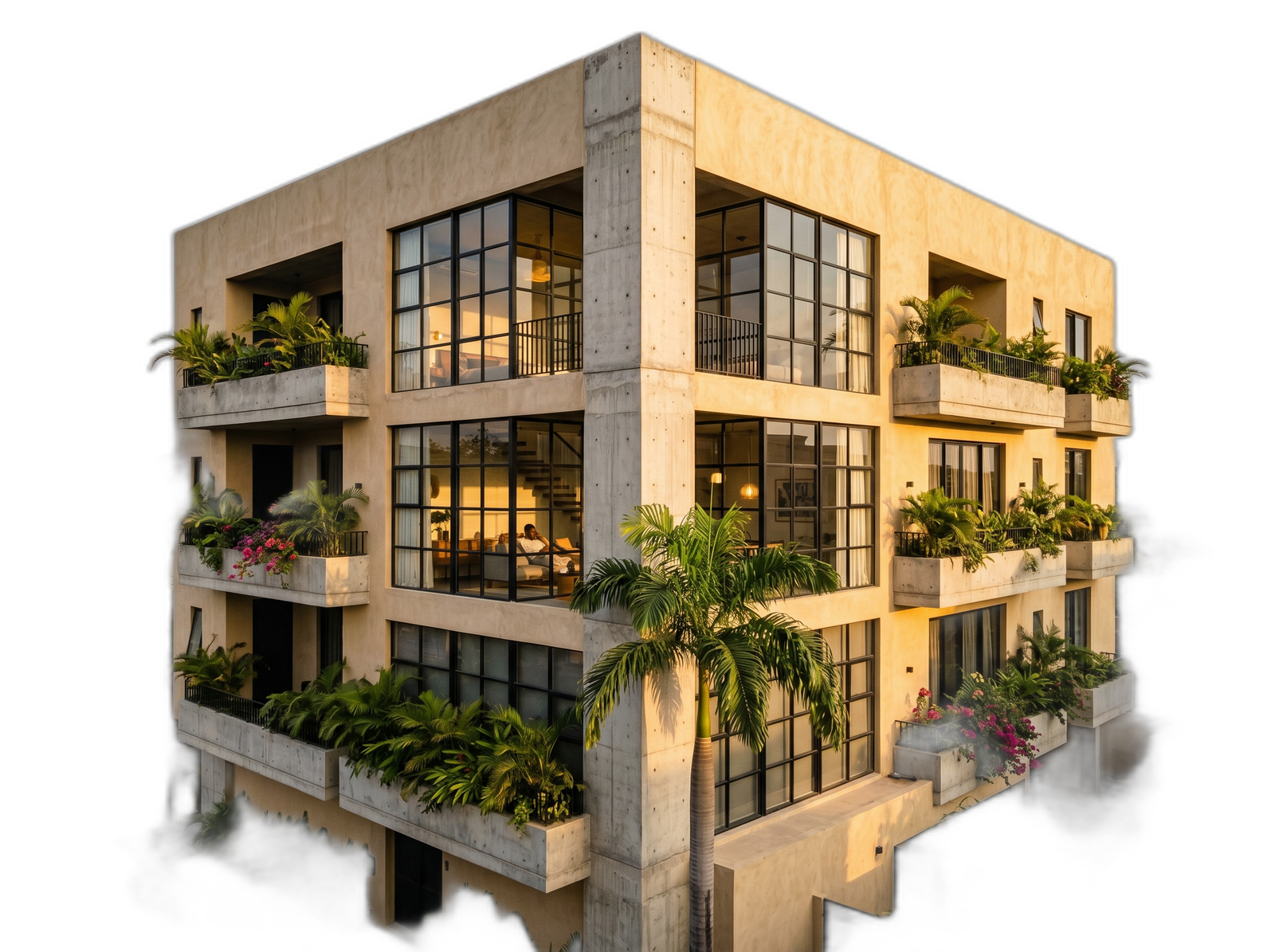
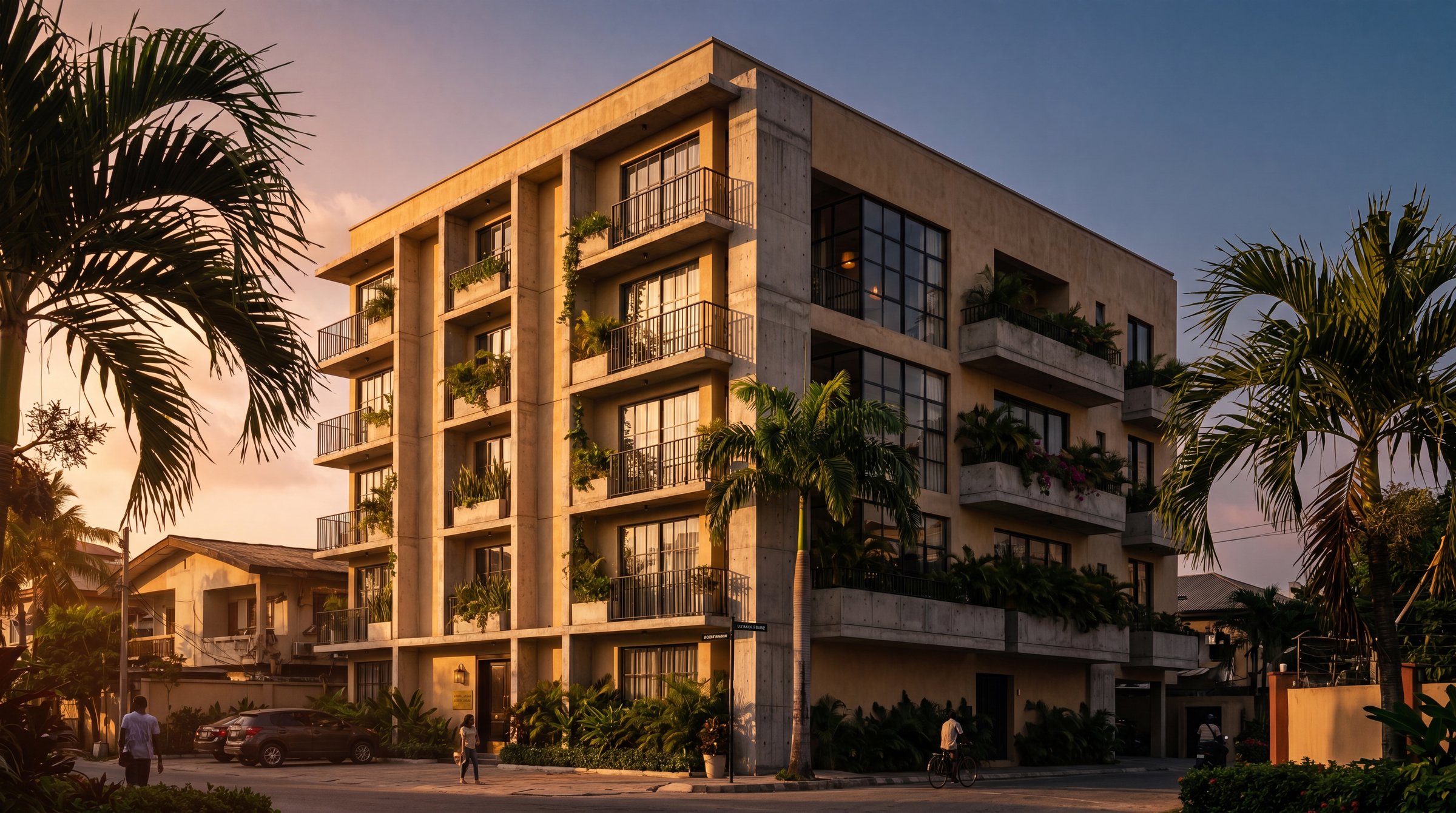
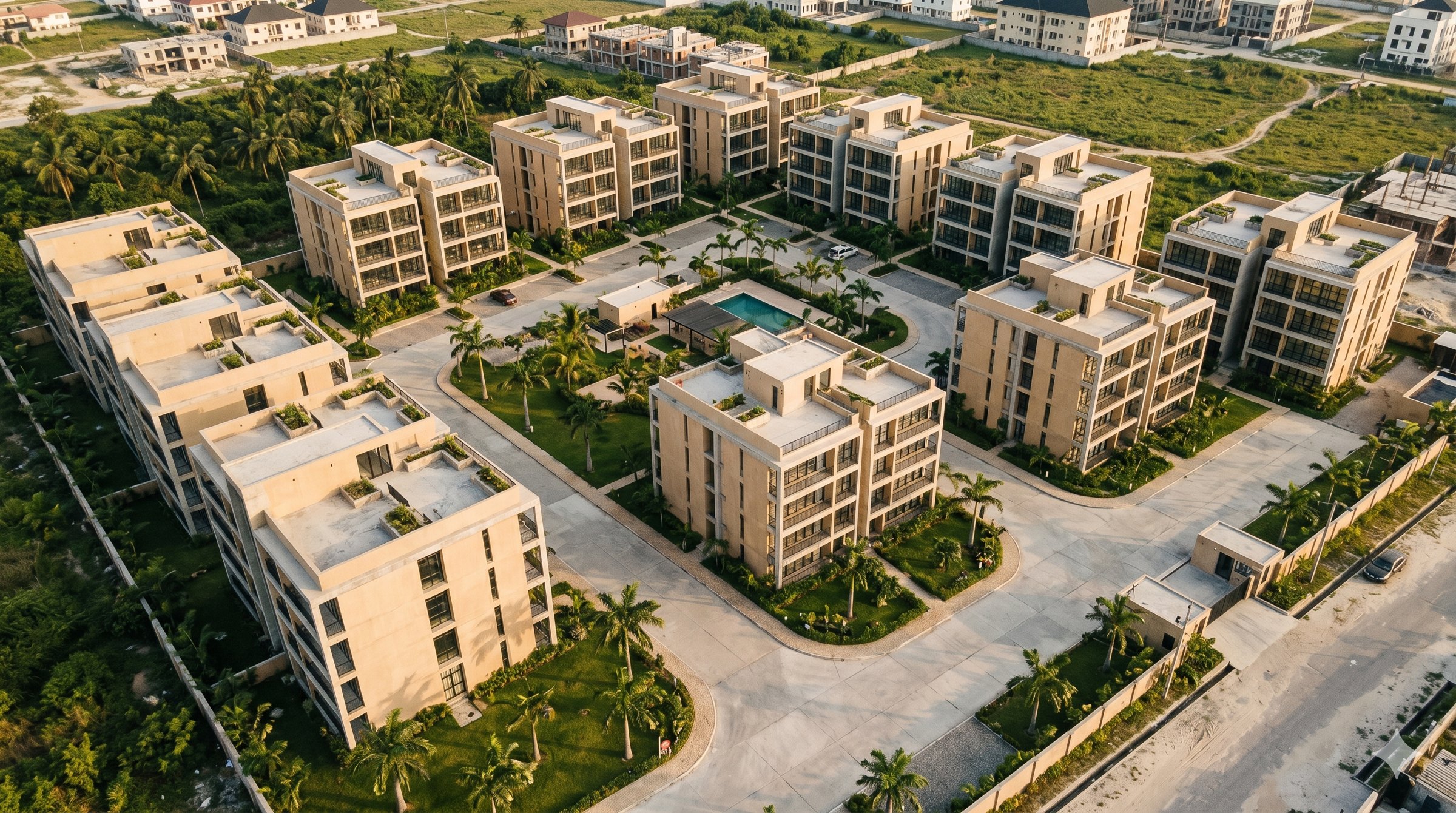
Eight mid-rise blocks sited around a central amenities zone. Generous green space, planted courtyards, a hotel-grade lobby per block. The reference register is Aman Residences meets Soho Farmhouse meets African contemporary. The opposite of glossy luxury, the opposite of starter-home developer aesthetic.
The 60-plot land bank consolidates into a single 3.6-hectare master plan. Eight residential blocks of five floors each, occupying the footprint of four to five plots per block. Each block contains 30 to 36 units.
The amenities zone anchors the center. The green space wraps the perimeter. Most parking is underground or on podium, returning ground-level surface to people instead of cars. The result is a community, not a compound.
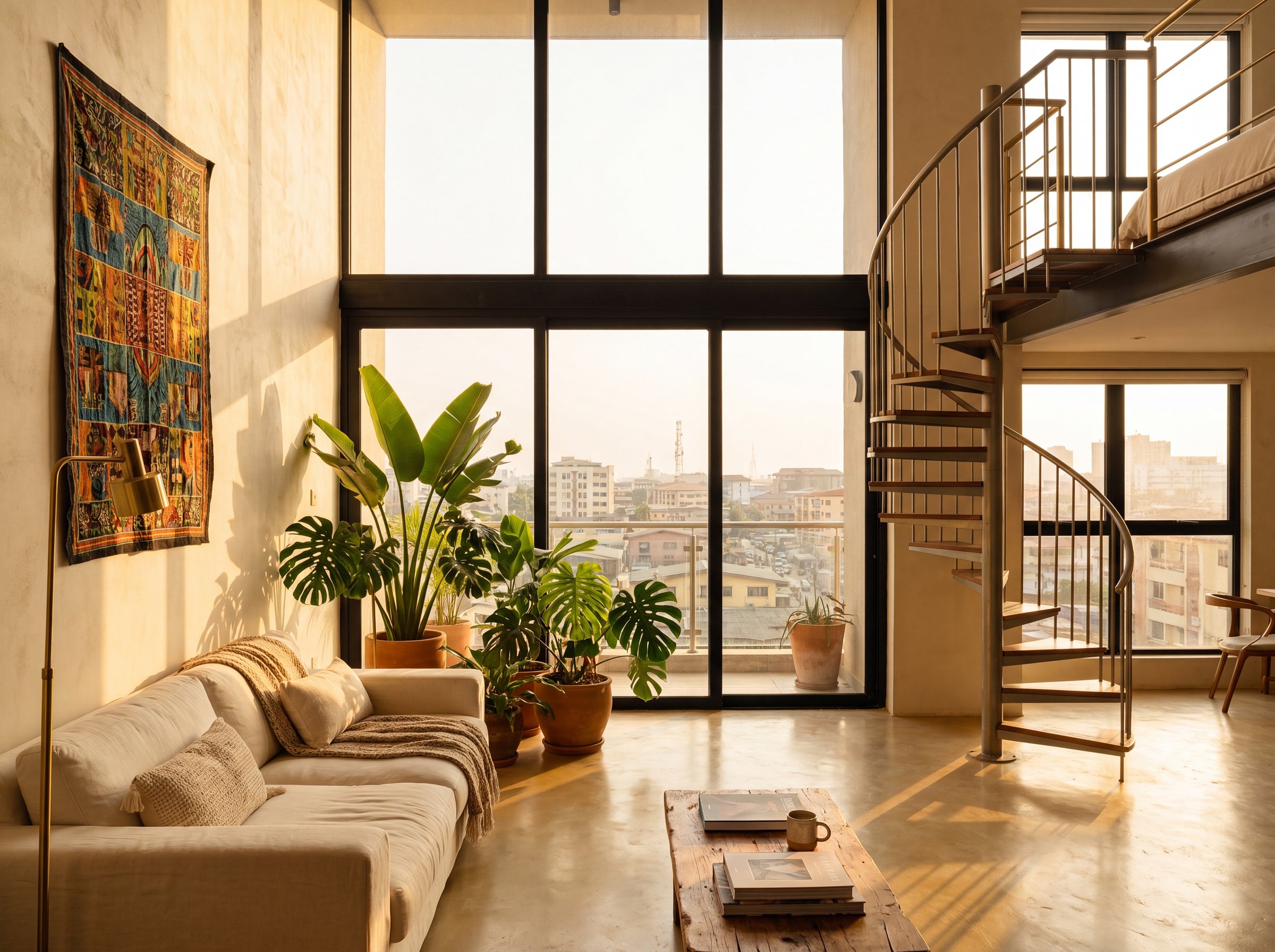
Every unit shares the same architectural vocabulary. Double-height living volume, steel-framed Crittall windows running floor to ceiling, micro-cement floors, exposed concrete or rough plaster walls, brushed brass fittings, dark timber joinery. The three SKUs differ only in scale and co-owner geometry.
Every Cornerstone transaction is governed by a bespoke Co-Ownership Deed, also called a Deed of Trust. Legal City Cafe drafts it for each group. LCC Trustees Limited holds the title. No co-owner can sell, encumber, or disappear with the document. The Deed turns a handshake into a financial instrument.
Property is vetted under the Co-Invest Verified checklist. Title, encumbrances, survey, vendor identity. Nothing proceeds without it.
The unit is divided into Equity Slots, two to four per loft. A one-page Term Sheet goes to every prospective co-buyer.
Each co-buyer is identity-verified. Address confirmation. Basic financial capacity check. Trust and compliance baseline.
Funds move to a designated escrow account at a licensed bank or fintech. Released only after the deed is signed and the title check is complete.
LCC drafts the Co-Ownership Deed. Review session held in person or virtually. Diaspora signatories sign by notarised e-signature.
Filed with the Lagos State Land Registry in a Holding Name under LCC Trustees Limited. Every co-owner is on the deed.
For income-generating units, LCC or an appointed estate manager handles rent collection, maintenance, and proceeds distribution.
When a co-owner exits, LCC manages the valuation, drafts the Deed of Transfer, updates the registry. Every exit is a clean event.
The Co-Invest tagline is honest. You do not need ₦80 million alone. You need ₦15 million and two people who trust you. Here are the actual numbers, per unit, per co-owner.
Pick a unit, pick the number of co-owners, see what each person pays. This is the real working budget for a Cornerstone Pact.
The amenities zone is the most important commercial decision in the estate after the unit mix. It is what justifies the price point, drives short-let yields, and gives the brand a place to put a customer's life. Hotel-grade, not gym-grade.
Concierge, library, lounge, private dining for co-owner gatherings. The social heart of the estate.
Hot desks, private offices, meeting rooms. Sells the operator brand to the young-professional segment.
Hotel-grade fitness and wellness. Designed for daily use, not for the brochure.
Three to five tenants. Coffee, grocer, dry-cleaner, salon, wellness clinic. Curated, not random.
Built into the orchard zone. Native shade trees. Designed by a real children's architect, not a developer.
Native landscaping. Drought-tolerant. Cocoa, mango, citrus. A real green space in Lagos.
Sized for full estate baseline. No public grid dependence. Diesel generators for peak only.
On-site borehole and water treatment plant. Direct-to-unit treated water. No tanker dependency.
On-site customer support, document collection, in-person deal closings. The platform lives here.
They have access to capital, and they have two or three people they trust. They have never had a product that lets them combine those two assets into property ownership safely. Cornerstone gives them the product.
Wants exposure to home-country real estate as a hedge and a generational asset. Cannot verify documents from London. Has one or two siblings or close friends who would gladly co-buy if the structure existed.
Banking, tech, oil and gas, consulting. Watches property prices on Instagram. Wants in. Has three friends who want in too. Needs the math to actually work, and the deed to actually hold.
Bank, telecom, NNPC service partner, or federal ministry cooperative. Hundreds of members, hundreds of millions in pooled savings, no quality property option. One sale equals twenty.
Want to build wealth together before or instead of marriage. Have no formal legal product that protects both partners. The Co-Ownership Deed establishes rights, protects contributions, and gives a clean exit if needed.
Cornerstone builds in three phases. Phase 1 proves the model. Phase 2 scales it. Phase 3 finishes it. Each phase de-risks the next. Each phase compounds the case studies, the deal pipeline, and the brand equity.
Build the spine road. Lay utilities. Complete one residential block (30 units). Open part of the amenities zone, the clubhouse, the pool, the co-working pavilion. Sell Phase 1 units to first co-ownership groups. Document case studies. Prove the model.
Build blocks B, C, and D. Complete the rest of the amenities zone: retail, gym, sauna, walking trails, orchard. Estate becomes fully operational. Roughly 120 units sold and occupied. Diaspora channel scales.
Build blocks E through H. Estate fully sold and occupied by Year 5. The Cornerstone brand becomes the category reference for structured co-ownership in West Africa. Second site selection begins.
All numbers are illustrative and anchored on current Ibeju-Lekki market data, the Co-Invest Africa fee structure, and conservative absorption assumptions. They should be revisited as Phase 1 generates real transaction data.
One. The bigger share is in development, not the platform fee. Most of the upside sits with Gidi as developer. If Songhai Askia holds equity in Gidi alongside the AXYM stake in the JV, total share rises into the ₦1B+ range over the full build.
Two. These numbers assume execution holds across 5 years. Slippage on phasing, construction costs, or sales velocity moves them. Build a sensitivity model alongside the development plan.
Three. The compounding asset is the case study library. After 50 closed Pacts on Cornerstone alone, the brand becomes the default reference for structured co-ownership in Nigeria. After 200, it is the category.
Remittances exceed USD 100B annually. The Non-Resident Nigerian Investment Account is operational. The infrastructure for sending money home is solved. The infrastructure for deploying it into property is not. Cornerstone is the answer to a question that already has 200 million people asking it.
Lagos residential prices up 18% YoY. Mortgages unavailable at 27% MPR. Solo buying has cracked. The conversation about pooling already happens informally. It just has no product yet. Whoever lands first becomes the default. After 50 deals, the brand is the category.
USD 4B in losses last year. 1 in 5 Lagos buyers scammed. 3% of Nigerians hold a valid title. The trust deficit is no longer a friction. It is the binding constraint. A platform with real legal architecture and a real Professional Trustee is no longer a nice-to-have. It is the only thing the market will accept.
Cornerstone is the launch development of Co-Invest Africa. The next move is a pilot block, a closed first cohort of Pact signers, and the documentation of the case studies that turn the brand into the category. The structure is built. The land is held. The Pact is written. The buyers exist. The only thing missing is the first 30 co-owners.